Fastest Cars in the World: Can the Koenigsegg Jesko Absolut Actually Reach the 500 km/h Threshold?

The competition to create the Fastest Cars in the World 2026 has never been fiercer. Modern hypercars are no longer evaluated just based on horsepower. Success today is dependent on a mix of modern aerodynamics, lightweight construction, intelligent gearbox systems, tyre technology, and effective power delivery.
The Koenigsegg Jesko Absolut has drawn the most interest of all the competitors. If its predicted performance proves true in real-world testing, it has the potential to become the fastest production car ever made, as it was designed with one aim in mind, highest top speed.
Koenigsegg Jesko Absolute: Designed for Maximum Speed
The Jesko Absolut is different from many hypercars that strike a balance between track performance and daily usability; it puts nearly all of its emphasis on top-speed ability.
Koenigsegg says the vehicle can go faster than 330 mph (531 km/h). Since this number comes from engineering simulations rather than an official speed run, it is still a theoretical maximum.
To reach this aim, the Swedish manufacturer totally redesigned the vehicle to lower aerodynamic drag. The Absolut has an extended long-tail body that lets air flow more easily across the car instead of utilising a large back wing for downforce. The outcome is an astonishingly low drag coefficient of approximately 0.278, which makes it one of the most aerodynamic production cars ever built.
A 5.0-liter twin-turbocharged V8 generating up to 1,600 horsepower on E85 fuel provides the power. The drivetrain is built to provide continuous acceleration even at very high speeds when combined with Koenigsegg’s creative Light Speed Transmission.
What validates a top speed?
There is a significant difference between asserting a high speed and formally owning a global record.
To be broadly accepted, speed records usually require manufacturers to finish runs in both directions under regulated settings. The last record is based on the average speed of the two passes, therefore minimizing the impact of wind and road slope.
Strict standards have prevented several amazing speed claims from being acknowledged as official worldwide records.
Bugatti’s 300 mph Feat: A Look Back
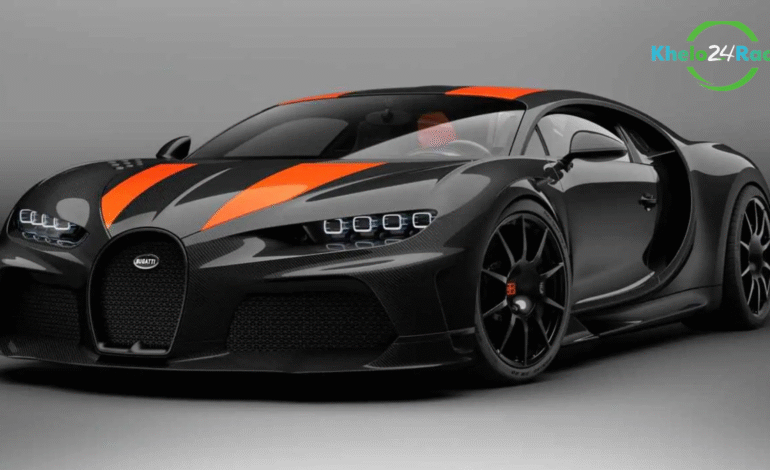
The Bugatti Chiron Super Sport 300+ owns one of the most important landmarks in automotive history and one of the Fastest Cars in the World 2026
Bugatti achieved an astonishing speed of 304.7 mph (490 km/h) at the renowned Ehra-Lessien test track in Germany. Despite the fact that the run was finished in only one direction and hence did not meet the criteria for an official Guinness record, it still stands as one of the fastest confirmed speeds ever attained by a production-based vehicle.The accomplishment proved that the 300 mph restriction may be surpassed in actual settings.Additional Hypercars Pursuing the Crown
Several companies are still vying for the distinction of having the fastest production car worldwide.
Hennessey Venom F5
An 1,817-horsepower twin-turbocharged V8 powers the American-made Hennessey Venom F5. Even if a totally validated top-speed run hasn’t yet happened, Hennessey thinks the vehicle may go beyond 311 mph (500 km/h).
SSC Tuatara
After its initial speed claims stirred debate, the SSC Tuatara became known all over the world.
Following more testing, the business finished a verified two-way average of 282.9 mph (455.3 km/h). Although lower than the original claims, it still ranks among the fastest production vehicles tested.
The Next Generation of Hypercars from Bugatti
Bugatti still leads the high-speed category.
Along with the Chiron Super Sport 300+, the company unveiled the Bugatti Mistral, a roadster predicted to be among the quickest open-top production cars ever created.
Looking further ahead, the Bugatti Tourbillon ushers in a fresh age for the company. With a total output of almost 1,800 horsepower, it combines a naturally aspirated V16 engine with electric motors rather than depending only on conventional combustion power. This method shows how hybrid technology will become an increasingly vital component of future hypercar performance.
Electric hypercars are catching up
Electric cars are quickly altering the performance terrain.Cars like the Rimac Nevera have shown that electric hypercars can reach astounding acceleration and have top speeds of more than 250 mph (400 km/h).
Electric cars have historically struggled with issues like battery heat management during prolonged high-speed driving; yet, improvements in cooling systems, battery technology, and high-voltage architectures are enabling greater speeds progressively more feasible. If you are crazy for cars follow us on Khelo24race
Future electric hypercars have the potential to be major competitors in the fight for ultimate speed.
The Contrast Between Claims and Actuality
Not every stated top speed reflects a formally confirmed accomplishment.Before running actual tests, many companies provide estimated speeds based on simulations or engineering computations.
Reaching speeds over 300 mph (483 km/h) requires much more than just a strong engine. The car has to have custom-designed tires that can withstand extreme centrifugal forces. Testing has to happen on very long and safe roads.
Germany’s Ehra-Lessien proving grounds are still among the very few places in the world where such experiments are feasible.
Why Aerodynamics Count More Than Horsepower
The largest impediment for a car going at high speeds is aerodynamic drag.The resistance of the air rises sharply with speed, so that each extra mile per hour gets increasingly more difficult to attain.
Engineers have to strike a delicate compromise between two conflicting objectives:
Reduce drag to raise top speed.
Keep enough downforce to help the car be steady and easy to manage.
The Jesko Absolut embodies this approach by giving low drag priority over high downforce, therefore enabling it to reach never-before-seen top speeds.
Transmission Technology Is Equally Crucial.
Achieving incredible rates is more than just increasing horsepower.
The transmission is essential since it guarantees that the engine operates inside its ideal power range during acceleration.
Designed to deliver practically instantaneous gear changes free from power interruption is Koenigsegg’s Light Speed Transmission (LST). Together with extremely high gear ratios, it enables the Jesko Absolut to keep accelerating towards its theoretical maximum without hitting the rev limit of the engine too soon.
Who Actually Owns the Title?
How fastest is specified will determine the response.
Taking theoretical potential into account, the Koenigsegg Jesko Absolut is now at the top with a stated ability above 330 mph (531 km/h).
The Bugatti Chiron Super Sport 300+, remains one of the most impressive speed accomplishments ever recorded if verified real-world results are the criteria, while vehicles like the SSC Tuatara and Hennessey Venom F5 continue to contend for the crown.
The argument will still be unsettled until the Jesko Absolut finishes an officially tested top-speed run.
At Last Thoughts
The race to construct the fastest production car is still very much in progress.
Lighter materials, improved aerodynamics, cutting-edge gearboxes, hybrid systems, and ever more effective electric powertrains assist producers to stretch the envelope of engineering.
The following major milestone seems to be breaking the 500 km/h barrier under formally confirmed conditions. That accomplishment will mark yet another amazing chapter in the annals of automotive innovation, regardless of whether it originates from a twin-turbo V8, a hybrid powertrain, or a completely electric hypercar.
Hypercar Model Top Speed Powertrain / Key Spec
- Koenigsegg Jesko Absolut 330 mph (531 km/h) 1,600 HP, Twin-Turbo V8
- Bugatti Bolide 311 mph (500 km/h) 1,824 HP, Quad-Turbo W16 (Track only)
- Hennessey Venom F5 311 mph (500 km/h) 1,817 HP, Twin-Turbo V8
- Yangwang U9 Xtreme” 308 mph (496 km/h) 2,977 BHP, Quad-Motor EV
- Bugatti Chiron Super Sport 300+ 304.7 mph (490 km/h) 1,600 HP, Quad-Turbo W16
- SSC Tuatara 295 mph (475 km/h) 1,750 HP, Twin-Turbo V8
- Bugatti Mistral 282 mph (453 km/h) 1,577 HP, Fastest Convertible
- Koenigsegg Agera RS 277.8 mph (447 km/h) 1,341 HP, V8 (Former official record holder)
- Bugatti Tourbillon 276 mph (445 km/h) 1,775 BHP, V16 Plug-in Hybrid
- Aspark Owl SP600 273 mph (439 km/h) 1,952 HP, Electric Hypercar